
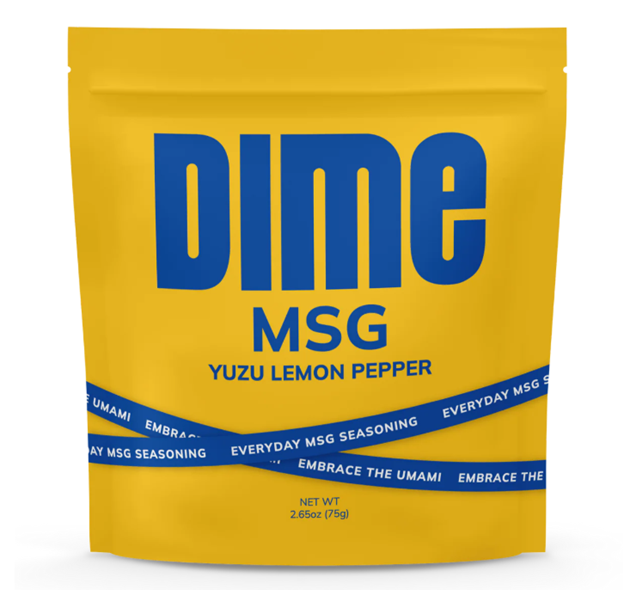
DIME: Flipping the narrative about MSG with an everyday seasoning that delivers bold, simple umami.
- KLS

- Apr 28
- 7 min read
For the 241st feature of our "Together Talks" campaign, we collaborated with DIME and Co-Founder, Jenn Ko. For decades, MSG was unfairly labeled as “bad,” because of a 1968 letter where a doctor speculated he felt "off" after eating Chinese food. The media ran with it, coining “Chinese Restaurant Syndrome” and fueling fear and xenophobia. But science proves MSG is completely safe.
MSG (monosodium glutamate) is simply glutamic acid, naturally found in foods like tomatoes and mushrooms. While the modern process of making MSG started in Japan, it’s now produced worldwide using fermented starches native to each region, like cassava in Latin America. Think of MSG like sugar in fruit: naturally occurring but also made in a concentrated form like table sugar.
The real issue was never MSG – it was the false narrative surrounding it. We’re here to shut down the myths and put MSG back where it belongs with bold everyday seasonings.

"Together Talks" feature 241: DIME presented by KLS - Your Trusted Shipping Solutions In The USA
What separates you from your competition? What have been the biggest challenges? Goals for upcoming year + Next phase of the company?
What have you learned since becoming an entrepreneur? What aspect of entrepreneurship do you appreciate the most? Share a decision that you made that was detrimental? What is your why?
Story of how it was created?
MSG (monosodium glutamate) has received a bad reputation for decades. My own family avoided it so I believed it was something to avoid. When we would eat out, my grandma would say “no mei-jing” when we went to restaurants, meaning “no MSG.”
But then I started seeing Asian foods like goji berries and bone broth become wellness trends and I wondered about MSG. When I was grocery shopping with a friend, he mentioned that he needed to get MSG, and I thought, “Wait, I thought MSG was something to avoid?”
I started researching MSG and learned that one English doctor wrote a letter that he felt sick after eating Chinese food and attributed it to MSG without any evidence. The media ran with the story and coined the term “Chinese Restaurant Syndrome." However, the truth is that MSG is safe, naturally derived from foods found in nature like cassava root through a fermentation process, and is in foods like tomatoes and cheese.
A Japanese chemist was the one who first made MSG by extracting glutamic acid, the source of the fifth taste known as umami, from kombu seaweed. The glutamic acid was combined with sodium salt to make monosodium glutamate.
When I learned the truth about MSG, I knew this was a story to be told and a narrative to be corrected, and DIME was born.
What separates you from your competition?
We really see two categories of competitors. The first is legacy seasoning brands, including companies like McCormick, Badia, and Lawry’s. These are the traditional, well-known names.
The second category is brands focused on Asian flavors like chili oils, chili crisps, and other flavor-forward products that have become popular over the past decade.
We operate in both spaces, but where we differentiate ourselves is in how we approach MSG. Most brands either hide the fact that they use MSG or explicitly avoid it because of the stigma.
At DIME, we do the opposite. We put it front and center and celebrate it.
Our mission is to redefine MSG through bold Asian flavors, and make it an easy way to add instant umami to anything.
What have been the biggest challenges?
One of the biggest challenges has been cost as we’re bootstrapping this business with our personal funds. There are so many costs that come up that I didn’t fully anticipate, everything from trademarks, production trials, and shipping. Even sending samples can become a significant expense.
Another major challenge is the stigma around MSG. We knew going into this that we’d be fighting against deeply ingrained consumer perceptions. Even before trying the product, people often have a preconceived notion just from seeing the word “MSG.” That mental barrier can prevent them from even considering it. But once they try it, they usually have that “aha” moment and they love it and want to use it. We essentially have to break through a wall that many other product categories don’t face, especially when compared to trending spaces like protein or fiber, where consumers are already eager to engage.

Goals for upcoming year + Next phase of the company?
Right now, we’re actively fundraising. Everything so far has been funded through personal capital, but to truly scale, we need additional resources. We’re seeing strong demand and selling out with each small production run, so raising capital will allow us to grow more meaningfully.
Another major goal is expanding into retail. We’re currently in small specialty stores, as well as Amazon and direct-to-consumer, but we want to move into larger, national retail partners and distribution.
Our third focus is product expansion. We don’t want DIME to be limited to just seasonings, so we’re exploring new formats. Ultimately, we want DIME to be the go-to when someone thinks, “I need flavor.”
What were your concerns to transition to starting your own business?
Growing up in an Asian American household, the expectation was stability, work hard, get a stable job, and follow a traditional path. That’s what I did for a while. I worked in tech and media and had that sense of security. But I always felt a pull toward building something of my own, something where I could bring my voice and perspective into the world.
Of course, there were a lot of concerns. How would I pay my bills? What if this failed after investing personal savings? I had never started a company before, so even the logistics, like forming an LLC, structuring agreements with co-founders, were overwhelming. On top of that, we’re tackling a product that comes with built-in skepticism. There’s always that question of whether this is the right idea at the right time.
But ultimately, I was burnt out from my corporate job. I was working incredibly hard, and I realized I’d rather put that energy into something I truly believed in. I believe this story about MSG needs to be told. That belief, combined with encouragement from friends, gave me the push to take the leap.

What have you learned since becoming an entrepreneur?
One of the biggest lessons has been learning to avoid comparison. In CPG, it feels like new brands are launching constantly. You see headlines about companies raising millions or gaining traction quickly, and it’s easy to feel like you’re falling behind. I’ve learned to stay in my lane. I still learn from others, but focus on our path and trust that we’ll grow in our own time.
On a more tactical level, I’ve learned a lot about the operational side of business, especially spreadsheets, cash flow, cost of goods, and margins. My background was in brand, marketing, and creative, so I wasn’t used to being deep in the numbers. Now, I’m tracking everything and learning how to manage the backend of a business. AI has been incredibly helpful in that process as well.
What aspect of entrepreneurship do you appreciate the most?
I really love the conversations. When you work at a traditional company, the conversations are usually about your role or responsibilities. Now, I get to talk about the mission and why DIME exists, what we stand for, and what we’re trying to change. There’s something incredibly fulfilling about representing something that is fully your own. It feels authentic. I’m not trying to execute someone else’s vision, I’m sharing something I truly believe in and that makes everything feel more meaningful.
Share a decision that you made that was detrimental?
We went through a packaging transition and switched to a new design and vendor. At the same time, I was managing inventory decisions without much prior experience. I made the call to send a large amount of product with new packaging inventory to our Amazon warehouse, even though we still had old packaging that needed to be used.
Almost immediately, I realized that wasn’t the right decision. I panicked and tried to reverse it, but there were already complications, things like existing inventory, expiration dates, and channel strategy that I hadn’t fully considered.
That experience taught me an important lesson: even though everything moves fast in a startup, it’s okay to slow down. Taking even half a day to think through all the variables before making a decision can save a lot of trouble.
What is your why?
My why is rooted in the idea that food should bring people together, not divide us. The stigma that is attached to MSG is due to culturally biased misinformation and I think it’s important to change that narrative.
Since launching, our mission hasn’t changed, but how we execute it has evolved. Initially, we focused heavily on branding and digital presence. That’s still important, but what we’ve learned is that our product is truly a “try, then buy.” Once people taste it and experience the flavor, they’re converted. So now, a big part of our strategy is in-person interaction, like events, demos, and everyday moments. Even something as simple as sharing it with friends at a bar can turn into a powerful introduction. That real-world engagement has become essential to achieving our mission.
Do you have a moment that brings you the most joy?
There have been a few moments, but the most meaningful ones come from recognition.
I’ve applied to thousands of opportunities, including grants, competitions, trade shows, and when we’re selected or win something, it feels incredibly validating. We recently won the Startup CPG Shelfie Award for best seasonings and oils, and became a finalist in the Naturally NorCal pitch competition. Out of so many applicants, those moments of recognition mean everything. They keep me motivated and remind me that we’re on the right path.
Give us a chance!
If there’s one thing I want people to do, it’s to take just a moment to understand what MSG actually is. Even asking ChatGPT is a great start. Give it a chance to change your perspective.
Piece of Advice
My biggest piece of advice is to stop second-guessing yourself. I spent a lot of my career doubting whether I could ever start something of my own or step outside the expected path. Looking back, I wish I had taken that leap sooner. Everything worked out, and I do believe the timing is right for this product, but trusting myself earlier would have made a difference.
So my advice is simple: take the chance. Don’t suppress that instinct. Don’t overthink it.
Just go for it.
Promo Code
Purchase from their website, DIME, and use promo code below:
KLIMSON10 for 10% off orders of $15+ (one use per customer)
Community Callout
In Closing
KLS wants to thank DIME and Co-Founder, Jenn Ko. , for today's "Together Talks" feature. Follow along for their journey with their social handles below!


Comments