
Strip Jerky: Stripped down to the good stuff

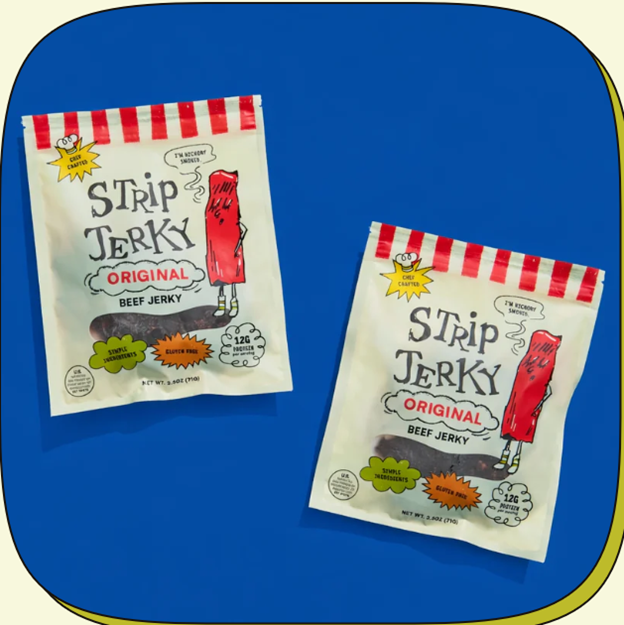
For the 238th feature of our "Together Talks" campaign, we collaborated with Strip Jerky and Co-Founder, Nicole Schlesinger. Gourmet beef jerky made with inside round beef and real ingredients. Sweetened with honey. Each bag contains 30g of protein and 195 calories.

"Together Talks" feature 238: Strip Jerky presented by KLS - Your Trusted Shipping Solutions In The USA
What separates you from your competition? What have been the biggest challenges? Goals for upcoming year + Next phase of the company?
What have you learned since becoming an entrepreneur? What aspect of entrepreneurship do you appreciate the most? Share a decision that you made that was detrimental? Do you have a moment that brings you the most joy?
Story of how it was created?
I started Strip Jerky because I noticed a huge gap in the market for a clean, healthy, and more inclusive type of beef jerky brand.
When I say that, I’m really talking about the marketing and packaging—those were the things that initially drew me to the category. I noticed that almost every beef jerky brand out there felt very hyper-masculine, aggressive, and outdated. It hasn’t really evolved. Most packaging features an animal—like a cow or a bull—and when people are eating food, they typically don’t want to see the animal it came from on the front of the package.
I’ve always been a huge beef jerky lover—I eat it every single day. But I also noticed that most jerky had a very strong, unpleasant smell. So there were really two major issues in the market: the smell and the branding.
At the time, I was working an office job as a receptionist, and I would eat beef jerky every day. One of my coworkers pointed out the smell, and that was a real moment for me. I realized how much it actually bothered people.
Whether you’re on a plane, in a car, at the office, or at the gym, jerky is a snack you eat on the go. You’re rarely sitting at home alone eating it. So having a product that smells strong and lingers in shared spaces is a real problem—especially for something meant to be convenient and portable.
That’s when I realized these two issues—smell and branding—weren’t really being addressed by anyone in the market.
After that, I went to culinary school and became a trained chef. I worked in both a bakery and a restaurant, which helped me really understand the food industry and how creative you can get when developing your own products.
I used culinary school as a testing ground. Whenever we had sections on jerky, I would make it at home every single day, bring it into class, and have my classmates and chefs try it. Together, we refined and perfected the flavor.
From there, I took a very scrappy approach. I used AI and Google for everything—researching co-packers, testing recipes for months, and figuring things out step by step. People always ask me how I found certain resources, and honestly, I just looked them up. We live in a time where so much information is available—you just have to use it.
In many ways, starting the company was the easier part. The real challenge begins once you launch—getting accounts, building distribution, and growing awareness.
I started this brand because I saw clear, unsolved problems in the jerky industry. I’ve tried countless brands—some of the biggest players like Jack Link's and Archer—and while they dominate the space, they all feel very similar. It’s essentially the same product with different fonts.
They smell strong, the packaging feels repetitive, and they cater to a very specific audience—gas stations, convenience stores, and pharmacies.
My vision was different. I wanted to create something more elevated—something that fits into high-end gyms, boutique hotels, and curated retail spaces.
Starting a company isn’t easy—it’s expensive, and it’s all on you. You don’t clock out at the end of the day. It stays with you constantly. Between packaging, distribution, and slotting fees, the costs add up quickly.
That’s why I always recommend really studying the market before starting something. Ask yourself: what does this category actually need?
When I look at categories like beverages or chips, they feel oversaturated. You walk into a store and see endless options—it’s overwhelming. I wanted to focus on a category that hadn’t been modernized yet.
What separates you from your competition?
I focus heavily on branding. A brand I really admire is Fishwife—they’ve completely transformed how people view a traditionally unglamorous product through packaging and storytelling.
That’s exactly how I see beef jerky. It’s not inherently glamorous—it’s dried meat. But when you rethink the packaging and build a world around it, you can completely change how people perceive it.
We’re telling a story, and I truly believe we’re one of the first in this space to approach jerky this way. I’ve done extensive research on competitors, and even seeing larger brands like Archer and Jack Link's engaging with what we’re doing feels like validation that we’re onto something.
What have been the biggest challenges?
The biggest challenge has been knowing what to spend money on—and what not to.
I’ve probably wasted around $10,000 on things I didn’t actually need. My advice is to try doing things yourself first or use available tools like AI before hiring someone.
When you start a company, you get flooded with messages from people offering services—marketing, branding, packaging—but it’s easy to overspend if you’re not careful.
Another challenge is pacing. You don’t need to scale immediately or land massive retail accounts right away. There’s this misconception that once you launch, you should instantly be in places like Whole Foods, Target, or Walmart.
In reality, you need to build an audience first. Growth should be intentional. I’ve seen founders burn through cash too quickly trying to scale before they’re ready.
For example, I keep my inventory tight—I order about 360 bags per month and pay it off before scaling further. It’s all about being strategic.
My co-founder, who works in venture capital, has been incredibly helpful here. He understands what investors are looking for and constantly reminds me not to rush into things before we’re ready.
Goals for upcoming year + Next phase of the company?
Over the next six months to a year, our focus is on reducing costs. We’re transitioning from 2.5-ounce bags to 1.75-ounce bags to improve our margins.
We’re also launching new products, including an additional jerky flavor and a line of meat sticks—a sweet and spicy option and an original honey flavor.
We’ll be exhibiting at the Fancy Food Show in New York, where we plan to debut our new product line. That’s a huge milestone for us.
My broader goal is to be in gourmet markets across all 50 states. I want Strip Jerky to be a staple in local, curated retail spaces.
We’re not planning to work with a distributor just yet, but that could change depending on opportunities that come out of the show. Long-term, getting into places like airport retailers would be a great fit for the brand.
For now, the focus is on growing sustainably and managing costs carefully.
What were your concerns to transition to starting your own business?
I’m from Connecticut, about an hour outside of Manhattan, and I’ve always had a passion for food. I studied marketing, PR, and advertising at the University of Tampa before moving to New York City.
I briefly worked a corporate job as a receptionist but quickly realized it wasn’t for me. That led me to culinary school, which opened up a whole new perspective on the food industry.
One of my biggest concerns was cost—especially in the beef industry. High-quality beef is incredibly expensive, and prices fluctuate constantly.
We produce a drier jerky, which reduces smell but also impacts yield, making it more expensive to produce. As a result, our margins are tight, especially early on.
There’s also the challenge of pricing. When you present a product to retailers at over $5 wholesale, you face resistance. But high-quality meat comes at a cost.
There are also strict regulations around sourcing, safety, and handling. Choosing the right co-packer and suppliers is critical.
I knew going in that this wouldn’t be a high-margin business right away. Profitability will come with scale.
What have you learned since becoming an entrepreneur?
I’ve learned how to develop thick skin.
I used to be very sensitive, but in this space, you hear “no” constantly. You also hear criticism—sometimes harsh criticism. Recently, someone told me my business would never succeed.
Instead of letting that discourage me, I use it as motivation.
I’ve also learned the importance of being outgoing. There’s a huge founder community, especially in New York, and building relationships is everything.
You have to be willing to meet people, reach out, and ask for help. I’ve built meaningful connections—even friendships—with people I initially met online.
That sense of community has been incredibly valuable.

What aspect of entrepreneurship do you appreciate the most?
The CPG community is one of the most supportive spaces I’ve experienced.
While there can be some competition, I genuinely enjoy supporting other founders. I try their products, promote them, and build relationships with them.
Connections are everything. Whether it’s for business opportunities, hiring, or growth, relationships open doors.
With our intern, we’re helping her build connections and gain experience. That’s incredibly valuable in today’s job market.
Share a decision that you made that was detrimental?
Be selective about who you work with and how you spend your money.
Do you have a moment that brings you the most joy?
The most rewarding moments are when customers reach out and tell me they love the product.
Getting into stores is exciting, but it’s a temporary high. Customer feedback is what really matters.
Hearing that someone buys the product regularly and genuinely enjoys it—that’s what makes everything worth it.

Piece of Advice
My biggest advice is to slow down.
Don’t chase big retail accounts right away. Building a successful business takes years—often 10 or more.
Focus on building a strong community and creating something original. Packaging and storytelling matter more than people think. First-time purchases are often driven by curiosity and design; repeat purchases come from quality.
Also, be kind. Whether you’re interacting with customers, buyers, or other founders, your attitude matters. People remember how you make them feel.
At the end of the day, we’re all building something, and it’s important to stay grounded, supportive, and authentic.
Promo Code
Purchase from their site, Strip Jerky, and use the promo code below!
SHOPSTRIP -> 10% off!
Community Callout
Liana Krasnow - noodo She’s been incredibly kind, hardworking, and inspiring. We’ve never actually met in person, but we talk all the time and have built a great relationship.
She’s building something really special, and I truly admire her work—especially her product and packaging.
In Closing
KLS wants to thank Strip Jerky and Co-Founder, Nicole Schlesinger, for today's "Together Talks" feature. Follow along for their journey with their social handles below!


Comments