
Balanced Breed: American-Bred Pet Wellness

For the 254th feature of our "Together Talks" campaign, we collaborated with Balanced Breed and Founder, Jeremy Schulz. Balanced Breed® is a premium, U.S.-sourced pet supplement brand built on transparency, quality, and long-term customer retention. As founder and CEO, I lead all facets of the business — from product innovation to digital growth strategy — driving our mission to clean up the pet supplement industry.

"Together Talks" feature 255: Balanced Breed presented by KLS - Your Trusted Shipping Solutions In The USA
What have you learned since becoming an entrepreneur? What aspect of entrepreneurship do you appreciate the most? What is your why?
Story of how it was created?
I started as an Amazon arbitrage seller and did that from 2017 until about 2022. Just before I wrapped up the arbitrage business, I found myself in a position that a lot of entrepreneurs experience. Once you get comfortable doing something and the systems are in place, it's hard to walk away. The money was good, and when you get deep into the weeds and have everything running smoothly, it's difficult to give that up.
But I knew we eventually had to pivot into something more reliable and long-term.
At the time, I was selling a lot of supplements and had gotten into pet supplements. I was selling someone else's product—I'll leave the brand unnamed—and fulfilling orders out of my house. I was utilizing our basement and garage in the Midwest. We basically converted the space into a climate-controlled fulfillment center.
While I was doing all of that, I would watch my dog follow me around. One day I noticed him slowing down a little bit. I almost gave him the same pet supplement we were selling. As I was packaging it up, I thought, "Maybe I should actually open one of these and give it to him."
Before I did, I started looking more closely at the ingredients and realized what junk it really was. There were fillers and ingredients I couldn't pronounce. That discovery sent me down a research rabbit hole, and it became the catalyst for our pivot into private-label and white-label products.
I already knew that private label would likely be the next step in my e-commerce journey. I just didn't know what the product would be. Maybe it would be toenail clippers sourced from Alibaba. Maybe it would be some novelty bottle opener attached to a flip-flop. I had no idea.
But the pet category resonated with me because it felt personal.
I've always been a dog lover, but I've never considered myself a hardcore pet person. I'm not someone who spends all my free time volunteering at shelters, although I have tremendous respect for the people who do. What I realized, though, was that I cared much more about what I was putting into my dog's body than I had ever acknowledged.
So I began researching ingredients that actually mattered.
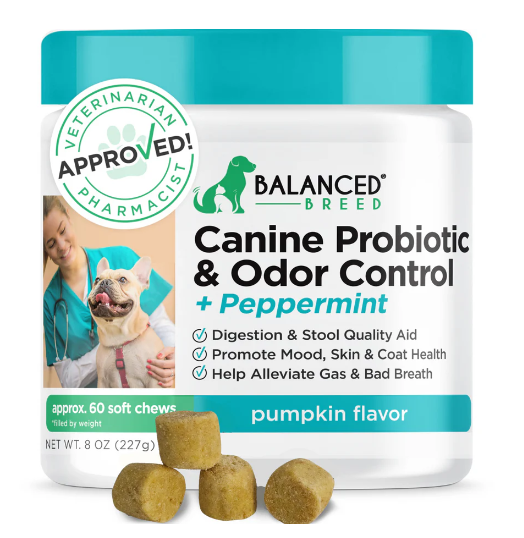
We manufacture soft chews. More precisely, we formulate and manufacture USA-made pet health supporting soft chews—like a treat with vitamins. One thing I quickly discovered was that many brands hide a lot of questionable ingredients in the inactive portion of the formula. That's where companies often cut corners. They use fillers and inexpensive ingredients simply because they're cheaper and easier to source. The lower the cost and the higher the production volume, the better their margins become.
We all know Amazon margins can be brutal.
Instead of creating a premium product and charging appropriately for quality, I found countless brands taking the easy route and making products as cheaply as possible just to win on Amazon. To me, that felt backwards. It contradicted the reason the product should exist in the first place.
That realization also marked my evolution from being an Amazon seller into becoming a brand builder.
I knew I would launch on Amazon because it was the platform I understood best. But right then and there, I also knew I wanted to build an omnichannel brand focused on the product itself—not just another Amazon business.
I immediately removed myself from most Amazon-focused newsletters, groups, and email lists. I kept one or two strategic sources, but I stopped obsessing over tactics, hacks, and algorithm manipulation. Whether it was black-hat, white-hat, or gray-hat selling strategies, I had simply lost interest.
Amazon built its empire on customer obsession. I decided that customer obsession would become the foundation of our brand as well.
My goal was always to go beyond Amazon and focus on serving customers wherever they wanted to shop.
That's really how we got started.
We officially launched on December 1, 2021.
What have been the biggest challenges?
Oh boy—where do we start?
First and foremost, there's a phrase you hear all the time: you don't know what you don't know. That turned out to be incredibly true.
One of our biggest learning experiences came after we started gaining traction on Amazon. Our products caught the attention of CVS, and they initially wanted to run a small test. That quickly evolved into a much bigger opportunity.
They told us they loved the brand and wanted to place our two flagship products into their new pet planogram. The rollout would be close to nationwide, with placement in many of their most pet-centric markets.
At the time, it sounded incredible.
But if there's one lesson I'd share with any entrepreneur, it's this: stay focused on your numbers, your business model, and your long-term strategy. Every opportunity needs to be evaluated through that lens.
Our tails were wagging—pun intended—when CVS came knocking. But looking back, I should have recognized immediately that our business wasn't built for that opportunity. Their model and our model were fundamentally different.
We moved forward anyway.
And it didn't work.
The good news is that the experience taught us how to refocus, pivot, and stabilize financially. Opportunities like that sound amazing, but they're also extremely expensive. We simply weren't ready for it.
The biggest challenge ultimately became cash flow.
Part of that was because I didn't know what I didn't know. Another part was that I was too stubborn to seek outside capital. I was determined to bootstrap everything myself for far longer than I should have.
One of the biggest lessons I learned was to stop listening blindly to everyone else's advice.
There are gurus everywhere. Everyone has an opinion. Eventually, I learned to take information, dissect it, and determine whether it actually applied to my business model and financial realities.
For years I had people telling me not to give up equity, not to bring in investors, and to maintain full ownership at all costs. If I had been importing generic products from Alibaba, maybe that would have been good advice.
But if your goal is to redefine a competitive pet supplement category, you need capital.
You need funding. You need a plan. You need to understand exactly how you're going to take market share, how long it's going to take, and what resources are required to get there.
Everything comes back to planning and projections.
You can't simply hire a few virtual assistants, manipulate algorithms, buy reviews, and expect to build a sustainable business anymore. I don't think that approach works.
The challenge for us has been learning to manage capital and maintain cash discipline in order to accomplish each milestone, goal, and step in building our business for sustainable growth.
Capital is real. Understand how much you'll need before you start, or you'll find yourself where we did.
We've spent roughly the last year and a half restructuring the company, repairing the balance sheet, and returning to a healthy financial position.
The biggest challenge has absolutely been the financial side of the business and the consequences of some of those early mistakes.
Goals for upcoming year + Next phase of the company?
After everything we've been through, we've brought in angel investment to help stabilize the business.
The encouraging part is that even while we were navigating those challenges, we continued attracting the kinds of partners we wanted all along.
Walmart came on board and essentially white-glove onboarded us. We went through their pitching process and were assigned dedicated representatives—similar to having an account manager. It was a fantastic experience.
Then Chewy came knocking.
Suddenly, we had all this potential runway in front of us. Honestly, if Walmart and Chewy had arrived before CVS, we'd probably be in a very different position today.
Our focus over the next twelve months is optimization.
We're continuing our fundraising efforts and are finally getting close to qualifying for SBA funding. We have a strong story and a strong case. We just need to finish working through a few remaining balance-sheet hurdles.
At the same time, we're actively raising capital. Our investor deck openly discusses the lessons we've learned. We aren't hiding anything. We're transparent about where we've been and how we've gotten here. To date, the brand has generated roughly $3.4 million in lifetime sales, and it has scaled very quickly. Over the last year and a half, we've focused on restructuring debt, improving operations, and correcting course where necessary.
One of the biggest recent developments is that we just learned we're onboarding with Sam's Club.
That's exciting because it reinforces an important lesson: if your product, service, and brand are strong enough—and you're willing to learn from mistakes—opportunities continue to appear.
One setback doesn't define your future.
We've been talking with Sam's Club for more than a year, and now they're interested in testing us online.
The key difference this time is that we're sticking to our strengths. We're an e-commerce-first company. Rather than rushing into stores, we're starting online with one of our best-selling SKUs. If you're a Sam's Club member, you're in for a very special value this Fall from Balanced Breed!
Our objective is to bring in additional funding and implement the systems we've proven on Amazon.
On Amazon, we've finally cracked the code for what works for us. While many brands struggle to achieve 10–12% net profit margins, we've reached 37% net margins.
Now we want to replicate that success across Chewy, Walmart, iHerb, Sam's Club, and other channels.
At the same time, we'll continue finalizing the debt restructuring and strengthening the business foundation for long-term growth.

What were your concerns to transition to starting your own business?
I'll actually take it back one step further.
Before e-commerce, I spent twenty years in radio broadcasting.
There were a lot of fun experiences and perks that came with the job, but the salaries weren't great—especially as technology evolved. I was still in the industry during the 2008 and 2009 recession, when streaming exploded and platforms like YouTube and Spotify began reshaping media consumption.
I could see where things were heading.
What ultimately motivated me to make the leap was realizing how constrained I felt.
A lot of people can relate to this. When you're working a traditional nine-to-five, you're often told what resources you can use, what decisions you can make, and how far you're allowed to go in your career. Maybe you have a micromanaging supervisor or a department head who limits what you're able to accomplish.
That was the environment I found myself in.
When I discovered e-commerce, I realized I could access the resources I wanted, make my own decisions, and take ownership of my success.
I learned that my results would be determined not just by how hard I worked, but by how many times I refused to quit.
If you're going to make this leap, you have to be prepared not to quit.
In my opinion, that's the real failure.
Success doesn't come from luck. It doesn't come from handouts. Hard work matters, of course, but persistence matters even more.
What really pushed me forward was realizing that I could control what I could control. Instead of having my hands tied, I could determine my own path.
Financial uncertainty is always a concern.
But would you rather be constrained and broke, or have an open runway in front of you and the freedom to choose your own destiny?
One quote I've always loved is that there's no better investment than investing in yourself.
If you genuinely believe that—and if you trust your instincts, your research, and your work ethic—I think you'll be successful in making the jump.
That doesn't mean entrepreneurship is for everyone.
Even people who start with a lot of money can fail spectacularly. You still have to put everything into it.
That mindset carried through every stage of my journey—from leaving radio, to building the wholesale business, to launching the brand itself.
Each step was a leap of faith.
And launching your own brand is an even bigger leap because it's yours. Depending on the category you choose, it can be incredibly competitive.
I definitely didn't pick an easy category.
What have you learned since becoming an entrepreneur?
One lesson I firmly believe in is this: delegate the things you're not most passionate about.
That said, I also think it's important to have at least some experience in every area of the business before you hand it off.
You don't need to be an expert in everything. But if you have no understanding of a function, it's difficult to evaluate performance, offer meaningful feedback, or recognize great work.
I learned that lesson years ago while managing talent in radio.
I would sit down with on-air personalities after their shows and give feedback. Sometimes they looked at me like I wasn't making any sense. Years later, I realized they were right—I lacked the perspective and vocabulary of a newer generation, which better aligned with our audience and core demographic.
The same principle applies to entrepreneurship.
Run some Amazon PPC campaigns. Spend time in QuickBooks. Attend webinars. Use Canva. Work alongside your packaging designer. Learn enough to understand the fundamentals.
Once you've done that, figure out what truly excites you.
Keep learning and growing in those areas, and delegate everything else as quickly as possible.
It's often more expensive to repeatedly fix your own mistakes than it is to have someone qualified do the job correctly from the beginning.
Having foundational knowledge also helps you communicate more effectively with your team. You'll better understand their challenges, and they'll better understand your expectations.
One example is accounting.
I should have hired a CPA much sooner. Even a part-time CPA or accounting agency would have helped.
I handled QuickBooks myself for far too long. Then we started talking to investors, and I found myself printing balance sheets and profit-and-loss statements that I couldn't fully explain.
I thought I knew what I was doing because I could categorize expenses.
That's not the same thing as understanding financial statements.
So my biggest lesson is simple: gain enough experience to understand every function, then delegate the things you're not passionate about.
Someone once asked why I hang my own TVs instead of hiring someone.
For them, it would take an hour and be worth outsourcing.
For me, I learned how to do it, I enjoy doing it, and I can hang a TV in fifteen minutes.
That's a good use of my time.
But the tasks you're afraid to learn—or the ones you consistently struggle with—those are the things you should consider hiring out.
What aspect of entrepreneurship do you appreciate the most?
I appreciate the ability to prioritize.
Everyone approaches life differently. My wife, for example, likes to check every item off a list as quickly as possible. She wants everything completed and organized.
I tend to look at things differently.
I evaluate what truly needs attention right now. Some tasks can wait ten minutes. Others can wait an hour. Some can wait a week.
I enjoy having the freedom to decide what matters most each day.
Maybe there are three things that absolutely need to get done today. Then I can spend two hours with my son. After that, I can return to work and tackle something else.
That flexibility is something I genuinely value.
People often assume that working for yourself means unlimited freedom. In reality, entrepreneurship requires sacrifice.
This week I turned down a beach trip. I passed on going to a World Cup soccer event in Charlotte. I chose not to attend because I had priorities that needed my attention.
The difference is that I got to make that choice.
And next week, maybe I'll spend a day on the pontoon boat instead.
I love having the ability to prioritize work, family, and life in a way that aligns with my values.

What is your why?
Our dog is a multi-breed rescue, and honestly, I just didn't like seeing him suffer.
At one point, I put him on a hip and joint supplement, and it seemed to help. Looking back, though, if I went deeper into those ingredients today, I'd probably find some of the same issues that originally concerned me.
So that's definitely the "why" that launched the business.
What has carried us through ever since is the desire to give other pet owners that same peace of mind. When our dog improved, I felt better knowing exactly what I was giving him. I wanted other people who had those same concerns to have access to something they could trust.
What continues to motivate me today are the customer responses.
Like any business, we have our share of customer service issues and things we need to fix. But the positive messages far outweigh the difficult ones. We receive emails from customers telling us things like, "I've never seen my cat's coat shine this much," or, "My veterinarian asked what I changed because my pet looks so much healthier."
Those stories never get old.
Customers will sometimes apologize before sharing their experiences, saying, "I hope I'm not bothering you." My response is always the same: this is exactly why we exist.
If people weren't calling with questions, concerns, stories, or feedback, we wouldn't have a purpose. This company was built because I asked those same questions myself. We wanted to create something that made those decisions easier for other pet owners.
So when customers reach out, that's not a burden—it's the reason we're here.
We're certainly not the only company doing this, and I don't pretend that we are. Humbly speaking, we're fortunate to be in a category filled with people who genuinely care.
In fact, I'll gladly shake the hand of almost any competitor in our niche because I understand their why. I respect their mission. I'll sit down and have a beer with them.
The companies I struggle with are the overseas knockoffs making false claims and putting profits ahead of transparency.
At the end of the day, our mission remains simple. We're not claiming to change the world. We're not reinventing humanity. But we do feel good about helping pets live healthier lives and giving owners products they can trust.
That's enough of a why for us.
Do you have a moment that brings you the most joy?
It's probably tied directly to what I was just talking about.
Those customer stories are easily the most rewarding moments.
Thankfully, we receive quite a few of them. When you create something that people genuinely appreciate, love, and trust, it's an incredible feeling.
Maybe it's because of my background in radio. For years, my job was essentially to connect with an audience. You hoped people would listen, enjoy what you created, and tell you it meant something to them. There was always a sense of satisfaction when someone would say, "I heard that segment on the radio, and it was great."
I get that same feeling with this business.
We've built something that people value, and hearing their stories brings a tremendous amount of pride and joy.
Beyond that, becoming a parent has added another layer to everything.
My wife and I are new parents, and we have a son. One of the things I look forward to most is sharing these experiences and lessons with him someday. Whether he chooses to become an entrepreneur or not, I hope some of what I've learned can help him navigate life a little easier.
A lot of the lessons I've learned through building this business are things I wish I had understood when I was younger.
Being able to pass those lessons on to him someday is something that brings me a tremendous amount of joy.
Current Fundraising
For anyone interested in joining the journey, we've extended our seed round slightly because of the recent Sam's Club onboarding opportunity.
As we prepare for that growth, we'll need additional manufacturing capital to support increased demand.
One of the most exciting developments for us recently has been finding what I believe is one of the premier pet supplement co-packers in the industry.
They're a referral-only operation, and we were fortunate enough to be introduced to them while searching for a new manufacturing partner prepared to scale with our growth and meet our stringent quality and sourcing demands. Typically, they work with much larger brands that are further along in their growth journey.
They've been in the industry a long time, and they immediately saw the potential in our brand. They believe in our mission, they believe in our products, and we're incredibly grateful to be working with them.
That partnership significantly upgrades our manufacturing capabilities. In many ways, it feels like we're finally playing with the big dogs.
Honestly, I didn't expect us to reach this point quite this soon, so we're very fortunate.
Of course, that level of manufacturing comes with larger minimum order quantities and greater capital requirements. They're working with us, but scaling at this level requires additional resources.
That's the primary reason for the current fundraising effort.
For the first time, we truly feel like we have meaningful runway in front of us. Now we're simply looking for a little more fuel for the jet as we continue to grow.
Piece of Advice
I've heard this lesson from several different people over the years, and it's something that continues to resonate with me.
I recently watched the BlackBerry movie, and it reinforced what may be one of the most important lessons I've learned: stay true to yourself.
Don't change who you are for a business partner, a relationship, an investor, or anyone else.
You are who you are, and there's value in that. Be proud of it.
If you're building a brand, let your personality and values shine through. Let the business reflect who you are. Obviously, there are times when you need to make strategic adjustments to better serve customers, but that's different from abandoning your identity.
Personally, I think it's important not to let business change you.
At the end of the day, we're all people. You put your pants on the same way everyone else does—your neighbor, a celebrity, a billionaire, whoever you want to compare yourself to.
Nobody is inherently better than anyone else.
That's something I've learned especially over the last few years.
In entrepreneurship, you can go from the highest high to the lowest low in a matter of moments. Success can be fleeting. Challenges can appear unexpectedly.
The one constant should be who you are.
Stay grounded. Stay authentic. Stay within yourself.
Community Callout
Drew has been incredible. He comes from a corporate data background and has developed some truly impressive systems and solutions. He's been a tremendous resource, and I'm grateful to have connected with him.
James Kirkby - Kirkby Consulting James is a Shopify expert and trusted partner for direct-to-consumer brands. He's evolved alongside the changing digital landscape and has deep expertise in modern search, AI-driven discovery, and e-commerce growth strategies. He's been a great resource for brands looking to scale online.
Project Pitch It is essentially Wisconsin's version of Shark Tank.
They featured our company and have been incredibly supportive ever since. Beyond the exposure, they've opened doors, facilitated introductions, and helped create valuable connections that have benefited our business.
David Gilbert David has been instrumental in helping us navigate fundraising.
He's an investor himself, primarily in the technology space, but more importantly, he helped us see the fundraising process from an entirely different perspective.
Without his guidance, I probably wouldn't have been speaking with the right investors. He helped us narrow our focus and become much more intentional about the conversations we were having.
What I appreciate most is that his advice never feels sales-driven. Instead, he approaches fundraising as a true partnership discussion.
He challenges you to think logically about whether a potential investor relationship makes sense for both sides, not just whether someone is willing to write a check.
He's a fantastic person, incredibly thoughtful, and remarkably humble. In fact, I'm fairly certain he wouldn't expect—or even want—a public shoutout. But he absolutely deserves one.
In Closing
KLS wants to thank Balanced Breed and Founder, Jeremy Schulz, for today's "Together Talks" feature. Follow along for their journey with their social handles below!


Comments