MIGHTY MINIS: Kids Love the Taste, Parents Love the Ingredients.

For the 267th feature of our "Together Talks" campaign, we collaborated with MIGHTY MINIS and Co-Founder, Ariana Pareja. As featured on Billion Dollar Showdown, Mighty Mini's is on a mission to revolutionize kids' health and happiness. We’re dedicated to promoting wellness through delicious, sugar-free vitamin gummies crafted with care and precision.
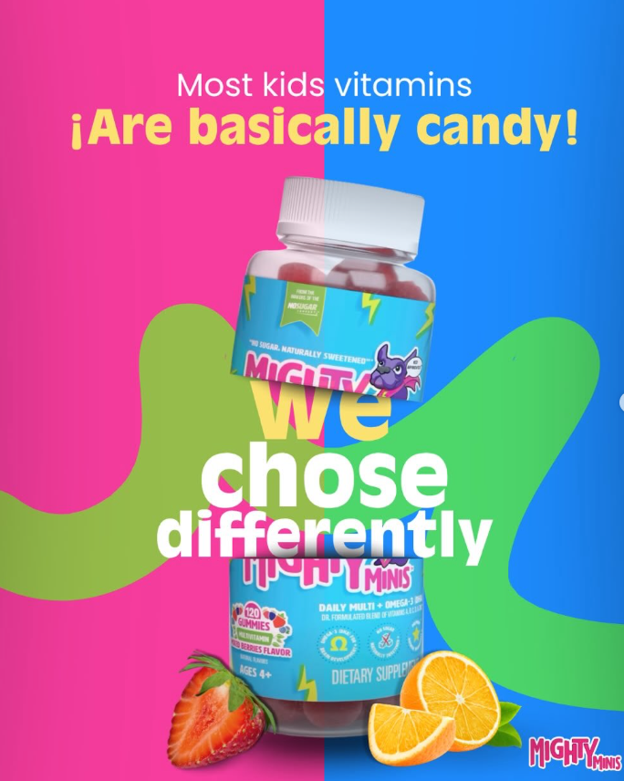
At Mighty Mini's, we use high-quality, natural ingredients to deliver gummies that are naturally flavored and packed with over 15 essential nutrients. Every bite is a step toward ensuring your child gets the nutrition they need—without the sugar or artificial additives.
Our goal? To empower parents with a healthier choice for their children's daily nutrition while fostering habits that lead to lifelong wellness.
💡 Why Choose Mighty Mini's?
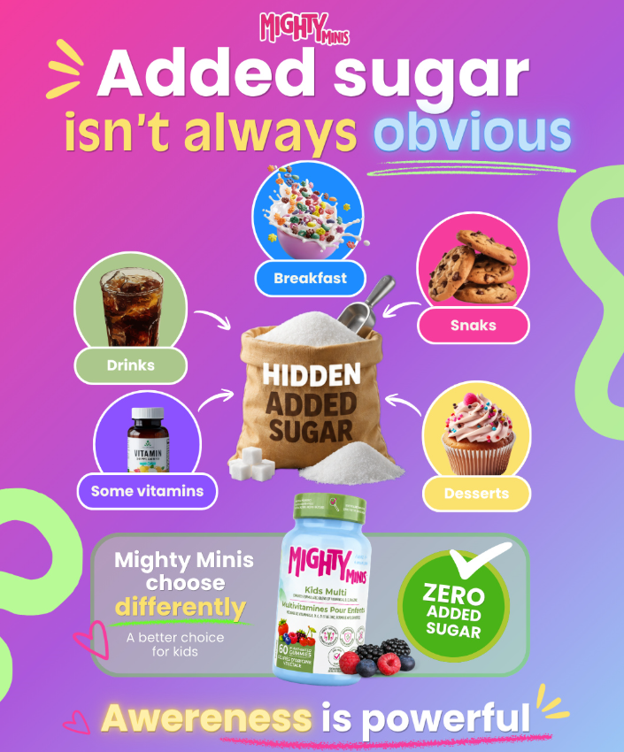
✅ Sugar-Free
✅ Naturally Flavored
✅ Over 15 Essential Nutrients
✅ Made with High-Quality, Natural Ingredients
Join us in creating a healthier, happier future for kids everywhere. Learn more about how we’re shaping the future of children’s nutrition—one gummy at a time.

"Together Talks" feature 267: MIGHTY MINIS presented by KLS - Your Trusted Shipping Solutions In The USA
How did you balance and accept the need for iterations? Goals for upcoming year + Next phase of the company?
What have you learned since becoming an entrepreneur? What aspect of entrepreneurship do you appreciate the most? Share a decision that you made that was detrimental?
Story of how it was created?
I'm a mom of two, and I could not find a decent vitamin gummy that I felt comfortable giving to my own children.
Mighty Minis was actually born—the entire brand, the voice, and everything—on Billion Dollar Showdown, which aired on CBS and NBC. The concept of the show, if you've never seen it, is eight entrepreneurs competing for the grand prize, which is the ability to launch a no-sugar health product on live national television.
I competed against seven other competitors, and I actually won the show. With that came a 20% equity stake in Mighty Minis with my co-founder, Brad Woodgate, who was the host of the show and has over 25 years of experience in CPG and wellness. So it was a great partnership from the start.
My background personally—this is not my first rodeo—but my previous company was acquired in 2021. That was a real estate technology platform that I scaled with my co-founders throughout the United States and Canada. We raised over $40 million in venture capital at a $150 million valuation, and we had over a million users on the platform.
It was primarily a B2B business, so this is my first time stepping into the direct-to-consumer space. There have been some challenges, but more importantly, there has been a lot of excitement with that because I'm now doing something that impacts so many families and so many lives. This is not just a business solution that I'm solving. This is an actual, real problem that mothers face—others like myself who are busy and don't have time to read every single label and solve everything themselves every single day.
As someone who had a child who was a very, very picky eater, those first seven or eight years of a child's life can be hard. It's hard to get them to eat their vegetables. It's hard to get them excited about something that's good for them. Being able to bring this product to market and see my own kids get excited about eating it has been so rewarding because it's not easy. As parents, it's not easy.
I am grateful that we are in a time and place in 2026 where we have so much access to information as parents and consumers that we can see what's in the label. There's a reason why, when I ask that question to someone, they always respond with, "I grew up on Flintstones." You know why? It was the only choice. There was no other choice. A mom would walk into a grocery store or a pharmacy, and that was literally the only option: Red 40, artificial flavors. Our moms didn't have the privilege of being able to choose a better option for their kids.
Fast-forward to today, and there's so much information out there. There are so many different brands and so many people marketing themselves as healthy, but still aren't actually healthy. There are so many sneaky ingredients.
For example, our product is all-natural. We don't use any form of artificial dyes or anything like that. To sweeten it, we actually use a premium ingredient called allulose, and allulose is naturally derived from figs and raisins.
There are a lot of brands out there that you are probably familiar with if you walk through a grocery store that are marketed as healthy. They're very expensive, and they're using things like maltitol and carnauba wax. Maltitol is something that can cause diarrhea, vomiting, and an upset stomach in small children. There are just so many things to consider.
Just because it's sold at Whole Foods, people think, "Oh, wow, this is great for me." That's the problem. Even though we have options and all this information, we still don't have enough options.
That's where Mighty Minis really comes in, and where we're different. We're healthy, but it also tastes good because that's a challenge, right? If you're trying to deliver a product to a six-year-old who's already a picky eater, who already won't eat anything other than buttered pasta and chicken nuggets, now you have to get them to eat something that's healthy but also tastes good.
That was a challenge in itself, and it was so much character development as a founder to get that taste right because we went back to the drawing board at least seven times. As you know, that's expensive to manufacture and sample seven times. But until my kids said, "Oh, this tastes great. I love this," that's when we went forward and said, "Okay, this is the final iteration of the product."
That's been something different that I've never experienced before. In my previous businesses, it was like, okay, you build out the code, and then you'll pivot a couple of times in terms of the product features in the software. But to actually have to rebuild from scratch every time is a huge challenge, but one that I welcome.
How did you balance and accept the need for iterations?
I always joke and say that my kids are head of product. They're my co-founders and head of product because they are both very picky eaters, and we had to keep going until we got it right. It was only when they gave the okay that we knew we had it.
Obviously, we also had a focus group with a mom community, and I did sampling with several families to make sure that we were all on the same page. But, yeah, my kids got the final say. They really did.
The challenge of having to go back to the drawing board, of course, comes with that feeling of, "Am I ever going to get this right?" But I think that the best brands and the best companies that really strive to solve a problem and that really care about the outcome aren't going to let those setbacks stop them. They're going to be delusionally obsessed with getting it right.
You only have that one shot with a consumer when they buy your product or they're sampling it at a store. You only get that one shot. If they don't like it, that's it. They're never going to be a repeat customer.
So you have to get the product right. You have to make sure that the quality is there. You have to make sure that you're doing your best to source the absolute best ingredients so that when they look it up and when they try it, it's the best thing that they've ever had. Otherwise, what are you doing as a founder? You have to commit to those things to make a product great.

Goals for upcoming year + Next phase of the company?
That's a great question. We got a little lucky early on. We got onto the TikTok wave, and we have over 200 affiliates that sell on our behalf. That grew some attention with retailers.
We were actually already in Walmart nationally, which was pretty early on for a brand of our size and age. We are obviously doing our best to really generate that online demand as well, so I recently brought on a head of e-commerce to the team.
That person also had previous business exits and is really good at scaling from zero to one in online e-commerce. So we're really building that out now. That's the next phase.
We currently already have distribution on Amazon and TikTok Shop, and now we're really working on that DTC demand generation to support our retail business and then expand into retail in the U.S.
What was your approach to affiliates and how has that changed?
I'd like to say that I was at the right place at the right time on TikTok because, as more time goes on, the more challenging I'm starting to see that it is. It's more competitive, and the landscape has changed.
In 2023, for example, people could still organically grow on TikTok, whereas nowadays everything is pay-to-play. The entire landscape has completely changed from what it was when it initially launched, and even within 18 months, things shifted significantly.
I don't know if you know this, but TikTok is the fastest-growing e-commerce platform in the world. For my target demographic, which is the millennial mom, it's the fastest-growing demographic as well. So you have so many brands trying to jump on this bandwagon.
With AI, it's making the process of finding affiliates easier because I can go into my TikTok Shop Manager and actually search every single affiliate who has worked with brands similar to mine. I can look up and see what their average price point is, where they're selling, what states they're selling in, and what their audiences look like in terms of male and female demographics and age.
You have all this data at your fingertips, which, as a founder, we didn't have access to five years ago or even two years ago. So that's really cool from a founder perspective.
But, on the flip side, those affiliates also have data points on you as a brand. If you're not spending a certain amount per month, they can see that, and they don't care. I could offer, "I'll give you a 70% commission," but they're like, "Okay, but your competitor might only be offering 10% commission, but your competitor is spending $20,000 a month on advertising." So they'd rather work with your competitor.
Now you have to convince them why they should work with you and grow with you rather than your competitor. There are so many ups and downs to that.
Before, that data wasn't available when TikTok Shop first launched. Now you're not only competing with ad spend, you're also competing based on what opportunity you can provide to these affiliates. What's the ongoing support and education that you bring to the table that's going to stand out for them? What retainer opportunities do you have for them? What collaborations do you have for them with maybe other opportunities?
There are so many things that go into it. So, my overall advice, if I had to give one piece of advice to a brand that wants to grow its TikTok Shop, is that you really need to treat it as its own channel and put time, attention, and focus into it the same way you would for retail, Amazon, or Shopify.
It's one of those things where you can't just do it on the side. You either need to really commit to it and commit to it for a solid 18 to 24 months, or just continue doing what you're already doing if you're already profitable.
What were your concerns to transition to starting your own business?
That's a great question. For me, the deciding factor in why I moved forward with this idea is that I was at a pretty interesting point in my life. I had already had an exit, and I was no longer looking at things the same way.
I knew that, for myself, if I was going to start another company from scratch and really put my time and energy into something, it needed to be more than just a money play. It needed to be able to have an impact. It needed to be able to touch several lives. For me, that was very important.
I think that when you're in a different phase of life, you operate differently and you care differently, right?
If I were starting Mighty Minis purely for profit reasons, I probably would have added sugar. Sugar is 10 cents per ounce to mass produce versus allulose, which is like a dollar per ounce. So my motivations might have been a little bit different.
Not to say that we're not profitable, but I'm just saying there's an easier path you could have taken. There was a substantially easier path that I could have taken. But then I would have just been like everybody else. I would have just been like everybody else on the shelf, and I really wanted to do something different.
I really wanted to be able to provide a mother just like myself, who's busy and overwhelmed, with an option. I think that it was a huge white space in the market because, for so long, mothers have just been having to buy whatever is in front of them.
As time goes on, Better-for-You brands are not a fad. This is a behavioral shift in consumers. You notice it even with Gen Z. People aren't drinking and smoking the way they used to. People aren't even drinking coffee the way they used to. People are more health-conscious.
You're seeing more and more events that have transformed into wellness gatherings. Why? Because that's what people want, and that is the future. People want longevity. People want to feel good about what they're buying.
So I didn't want to be just another Flintstone on the shelf. I wanted to be a product that a mother could look at, read the label, and say, "Yes, I feel good about giving this to my child."
That was the main thing for me.
What have you learned since becoming an entrepreneur?
I feel like everything. As time goes on, the more and more time goes on, the more I'm just incredibly humbled on a daily basis.
But I would say that when it comes to this industry, you can't fake a good product. You can't fake a good product. You can't half-anything when it comes to the actual product itself. It has to be amazing.
There's no amount of marketing and no amount of distribution that will create a loyal following of repeat customers unless your product is amazing. There's no way around that.
If you're in a B2B business, you can get around that if you have the right government contract or the right joint venture. You can have a successful, sustainable business that goes on for many, many years. But with a product, it has to be amazing. It has to be amazing. It has to be amazing.
What aspect of entrepreneurship do you appreciate the most?
I think community is a big, important part. I do feel that if I hadn't been surrounded by amazing mentors and a strong community, no matter what business I started, but especially this one because everything is new to me here, I wouldn't have been able to fast-track things without being able to pick up my phone and call someone who's killing it at TikTok or killing it on Amazon and pick their brain.
Community is a very important aspect, and mentorship as well. Having the right people in your corner is so important.
Networking has always been a huge, huge part of any business I've ever started, and this one especially, because I'm learning everything brand new. So I would say community is a huge, important aspect that I've always appreciated, but I appreciate it even more now.
Share a decision that you made that was detrimental?
I would say that having the awareness to know when to let go of a certain route that you're trying to go down is important.
For example, when I was first starting this company, I was very sold on the idea that a dream agency would just solve all your problems. I think a lot of founders get that information by going to these different conferences. They hear people say, "Oh, well, I'm using this TikTok agency, and they're amazing. They did so well for me."
Just because they did well for that brand doesn't mean that they're going to miraculously work for your brand.
Over the years, I've learned that in order to really understand how to maximize a certain channel, you have to figure it out on your own, right? Don't just rely on an agency. Try to take things in-house so that you really understand the process.
More importantly, you need to see the overall view of how the systems are coming into play. You definitely have to roll up your sleeves and get your hands dirty.
Do you have a moment that brings you the most joy?
My kids had one of those career days at their school, and I was able to present Mighty Minis and the backstory of Mighty Minis to all of the kids.
At that time, my son was in third grade and my daughter was in fifth grade. Just seeing their little faces when I was presenting Mighty Minis, they were so excited because all of their little friends were so excited.
Afterward, I asked my son, "What was your favorite presentation from Career Day?" And he was like, "Yours."
I was like, "Why? Is it because I'm your mom?"
He goes, "No, because you were the only one that was there that has a company that's just for us kids."
How did you balance kids as your product testers?
We would get all of our competitors' gummies and then our gummies, and we would go through these taste tests. We would say, "Okay, what do you like about this? What do you not like about this? What flavor do you like? Do you like the color? Do you like the way it feels? How does the texture feel? How does it feel on your teeth?"
We would get very granular in terms of the questions that we would ask. But with kids, it's pretty self-explanatory. They try a gummy, and if it tastes terrible, they will spit it right out.
Kids don't sugarcoat anything, right? They'll be the first ones to say, "This is yucky." And when it does taste good, they'll say, "This tastes good."
So it was just enough of "This tastes good" to move forward.
Piece of Advice
There are so many founders that I meet who say, "Oh, this is a great idea because it's trending," or something like that, like fidget spinners or something similar.
Instead find an actual problem that you're solving. Because if you're actually solving a problem for your consumer, you will survive. You will survive the heavy days.
Community Callout
My business partner and owner of Joyburst.
She was super helpful with giving me referrals for DTC website issues.
They are great too.
He's amazing.
PeeSport - Henry Snow
He's been super helpful too.
In Closing
KLS wants to thank MIGHTY MINIS and Co-Founder, Ariana Pareja, for today's "Together Talks" feature. Follow along for their journey with their social handles below!


Comments