Nomie: The Complete Pantry Meal Made for Kids

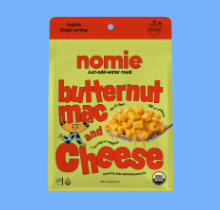
For the 254th feature of our "Together Talks" campaign, we collaborated with Nomie and Founder, Roopa Annadatha. Parents Are Doing Everything Right. The Options Are Failing Us. The convenient options for parents run out after a kid turns 2. Too old for baby food. Too young for adult meals. The entire 2–6 window has been ignored, and parents are left making do with snacks, adult frozen meals, or cooking from scratch. Every. Single. Day. So We Decided to Fill the Gap. The first complete shelf-stable meal for kids 2–6. Organic. Just add hot water.

"Together Talks" feature 254: Nomie presented by KLS - Your Trusted Shipping Solutions In The USA
What separates you from your competition? What have been the biggest challenges? Goals for upcoming year + Next phase of the company?
What have you learned since becoming an entrepreneur? What aspect of entrepreneurship do you appreciate the most? Share a decision that you made that was detrimental? What is your why?
Story of how it was created?
After my son became a toddler, feeding him felt impossible.
He was going to daycare, and I was cooking breakfast, lunch, and dinner for him every day. At the same time, I was working 60-hour weeks at Peloton, and I remember thinking, there’s just no way I can keep doing this.
People often say, “Just feed them what you’re eating.” But I had no time.
I was eating what I jokingly call “girl dinners”—a quesadilla with some cheese, maybe a salad with dressing. Nothing that felt substantial enough for a growing toddler. I really wanted to give him something nutritious, so I spent far more time preparing meals for him than I did for myself.
But it was taking a toll.
I simply didn’t have the time, and there were no options on the market that didn’t make me feel guilty.
The real breaking point came during an eight-hour flight. My son spent the entire flight eating Goldfish and pretzels. I remember sitting there thinking, Why isn’t there a meal option that’s as easy and convenient to grab as those snacks?
Because for parents—especially parents who are constantly on the go or pressed for time—it’s incredibly easy to hand over a snack and move on. There are endless snack options available for kids, but very few convenient meal solutions.
That’s when I started putting on my R&D hat.
I spent 15 years in product development, bringing multiple products to market in the consumer electronics industry. Creating products and solving problems is in my DNA.
I had never worked in CPG before, but I knew how to research.
So I started exploring food technologies. I wanted something shelf-stable without sacrificing nutritional value. What I found was that most shelf-stable products rely on high-heat processing, which can significantly degrade nutrients.
That research led me to freeze-drying technology.
As I dug deeper, I became fascinated by the process. Freeze-drying offered a way to preserve food while maintaining much of its nutritional integrity, which aligned perfectly with what I wanted to create.
From there, I started conducting market research. Before investing significant time and resources, I wanted to know whether parents would even be interested in a freeze-dried meal format.
Would parents actually want a complete meal in a pouch where they simply add water?
The format is common in backpacking and camping, but I wasn’t sure how it would translate to everyday family life.
To find out, I surveyed roughly 400 parents.
The results surprised me.
Nearly 80% strongly agreed or expressed strong interest in a product like this.
That validation was really what kicked everything off.
At that point, I knew there was something worth pursuing.
What separates you from your competition?
When I think about competitors, I’m really looking at the products parents already reach for when they need convenience.
That includes traditional boxed meals like macaroni and cheese, which is still one of the easiest kid-friendly meals to prepare at home. It also includes frozen meal companies that market directly to consumers through subscription models.
Those are the products I see as our primary competitors.
What differentiates us is that we’re able to deliver a homemade-style meal in a shelf-stable format.
We’re bridging two worlds.
On one side, you have the convenience of shelf-stable snacks and pouches. On the other side, you have fresh homemade meals that typically exist in the refrigerated or frozen sections of the grocery store.
We bring together the best aspects of both.
Parents get the convenience, portability, and long shelf life of a pantry product while still providing a meal experience that feels much closer to something homemade.
The result is a solution that works whether you’re at home, traveling, at daycare pickup, between activities, or simply trying to get dinner on the table during a busy weeknight.
What have been the biggest challenges?
Freeze-drying is common within the backpacking and camping industries, but in the United States, the space is largely dominated by a small number of companies.
While the technology itself has been around for a long time, creating a children's meal introduces an entirely different set of challenges.
I have to balance several factors simultaneously.
Taste comes first.
If kids don’t like the taste, they’ll reject it immediately.
After taste comes nutrition and texture.
One of the benefits of freeze-drying is that it preserves much of a food’s texture, but it is still a unique process. You have to carefully determine which recipes work best within that format.
One of the biggest challenges has been that the supply chain simply wasn’t built for this type of everyday use case.
The industry is geared toward backpacking, camping, and outdoor adventure meals. In those situations, consumers are primarily looking for convenience and calories.
But in everyday family life, taste is king—or queen.
That meant finding food scientists and R&D partners who truly understood what we were trying to accomplish.
Honestly, it was incredibly difficult.
I believe I’m now working with my third food scientist.
The challenge wasn’t a lack of talent. The challenge was helping people understand that we weren’t optimizing for manufacturing efficiency first.
We were optimizing for taste.
That mindset shift was difficult for many people.
I often heard things like, “That’s not going to work.”
And my response was always, “It will work. I’ve tested it. I’ve validated it. We just need to figure out how.”
This industry has traditionally approached freeze-drying in a very specific way. Bringing it into an everyday family meal format—especially for kids—required a completely different perspective.
Then there was manufacturing.
Our process is unique because it combines cooking and freeze-drying.
There are many freeze-drying facilities in the United States, but most focus on single-ingredient products. Think freeze-dried fruit, yogurt melts, or other individual ingredients.
Very few facilities can both cook complete meals and freeze-dry them under one roof.
In fact, there’s only one fully established facility doing that today, and my manufacturing partner is currently building out similar capabilities.
That was extremely important to me because I didn’t want a two-step process.
I didn’t want meals being cooked at one location, refrigerated or frozen, transported somewhere else, and then freeze-dried.
That approach introduces additional shipping costs, refrigeration requirements, logistical complexity, and potential quality degradation.
I wanted everything integrated into a single process.
Finding a partner capable of doing that was a challenge in itself.
Then there were certification requirements.
We are pursuing organic certification and are currently in that process.
That added another layer of complexity because some manufacturers had the capabilities we needed but were not organic certified and had no interest in becoming certified.
So we had to continue searching.
Between recipe development, manufacturing capabilities, supply-chain design, certification requirements, and scaling considerations, there were countless moments when I questioned whether I should continue.
I often found myself wondering why this product didn’t already exist.
The reality was that there wasn’t anyone who had done exactly what we were trying to do before. There wasn’t a founder I could call for a roadmap.
Thankfully, my background in supply chain, operations, and product development gave me the tools to keep moving forward.
That experience ultimately made all the difference in bringing Nomie to life.
Goals for upcoming year + Next phase of the company?
Our immediate milestone is launch.
Today, we are still pre-launch, but we’ll be opening pre-sales soon and then officially beginning shipments. That’s an incredibly exciting moment for us.
Over the next six to twelve months, our primary focus will be direct-to-consumer growth.
We’ll also be launching on Amazon later this year.
The combination of a shelf-stable product and pouch format makes our product particularly well suited for e-commerce. It ships efficiently and allows us to reach families across the country.
Those two channels—our website and Amazon—are our initial priorities because they will help us validate product-market fit.
We want to gather customer feedback, learn from real-world usage, and continue refining the product where necessary.
From there, we plan to expand into regional retail, beginning with natural and specialty channels.
As we continue growing, our goal is to expand nationally within natural retail and eventually move into mass retail as well.
Because we’re organic and focused on children’s nutrition, retailers like Whole Foods and Sprouts are natural fits and absolutely part of our long-term strategy.
But as a parent, when I think about where I personally shop, I immediately think of Target and Costco.
Those are the places where many families spend their time and money.
Additionally, their distribution models and supply-chain efficiencies would allow us to offer the product at a very attractive price point.
If opportunities arise in the future, I believe both Target and Costco would be exceptional long-term partners.
What were your concerns to transition to starting your own business?
There were a lot of concerns.
Anyone who says they never doubted themselves during the first few years of entrepreneurship is probably not being honest.
You constantly question your decisions.
You ask yourself whether you’re doing the right thing, whether it’s the right choice for your family, and whether you’re making a mistake.
I left a very secure, high-paying career.
For 15 years, I had been climbing the corporate ladder and building what many people would consider a prestigious career.
Leaving that behind was exciting, and I genuinely wanted to do it.
But what people don’t always talk about is what happens afterward.
The reality is that you wake up some mornings and think, Oh my God, what did I just do?
To make matters even more challenging, I was five months pregnant with my second child when I left my job.
When you have children, every decision feels bigger.
Of course, I wanted personal fulfillment, but I was also thinking about creating opportunities for my family and building something that could generate long-term value for them.
One of the biggest struggles I experienced was a loss of identity.
For 15 years, my career had been a major part of who I was.
Suddenly, that identity was gone.
I was no longer the executive climbing the corporate ladder.
I was becoming a founder.
The challenge was that I hadn’t launched yet.
I was stuck in that messy middle—the transition between who I had been and who I was becoming.
Honestly, I ended up returning to therapy to work through a lot of those feelings.
Entrepreneurship requires tremendous mental strength.
I didn’t want those identity struggles to become something that held me back.
And then there were the business challenges.
For example, I had secured a manufacturing partner and built much of the supply chain around them.
Then they landed a massive contract worth roughly $100 million and abruptly stopped onboarding smaller brands.
Suddenly, I found myself back at square one.
Everything I had built around that relationship had to be rebuilt.
Moments like that absolutely tested me.
There were times when I questioned everything.
But what continues to keep me moving forward is the reaction people have when they experience the product.
Every time someone tries it, there’s a moment of disbelief.
They’ll say, “Wait—you just added water?”
And I’ll say, “Yes, that’s it.”
That reaction reminds me that what we’re doing is genuinely innovative.
No one has done this before.
It’s difficult because it’s new.
And that’s exactly why it’s worth pursuing.
What have you learned since becoming an entrepreneur?
The first thing that comes to mind is bookkeeping and accounting.
Honestly, that’s probably the number one thing I never wanted to get involved with, but as a founder, you have to know your numbers. You have to understand your books and stay close to the financial side of the business.
Beyond that, one of the things that has completely transformed how I operate day-to-day is AI.
I know AI is everywhere right now and everyone is talking about it, but it has genuinely changed the way I work. Especially with some of the new capabilities that have been released over the past year, it has allowed me to operate at a level that simply wouldn’t have been possible otherwise.
I’m a mom of two young children. I have a three-year-old and a one-year-old. I’m a solo founder building a completely new category, managing supply chain, operations, product development, partnerships, fundraising, and everything else that comes with launching a business.
There are only so many hours in a day.
At one point, I felt like I was constantly trying to keep up with an endless list of responsibilities.
To help manage that, I built what I call a “Chief of Staff” skill within Claude. It helps keep me organized, keeps me focused on priorities, and helps me stay on top of everything that needs attention.
I also use AI for things like email design, content creation, brainstorming, research, and a variety of operational tasks.
What’s been incredible is that there are areas where I previously would have hired outside help or spent money on consultants. Now I can often use AI to get much farther before needing additional support.
As a bootstrapped founder, that matters.
Every dollar has to be spent carefully.
I’m constantly evaluating where I can create leverage and where I can maximize the impact of limited resources. AI has allowed me to do that in a way that simply wasn’t possible a few years ago.
Of course, there are limits.
If I’m dealing with something legal or another highly specialized area, I’m absolutely going to consult a qualified professional.
But for many day-to-day business functions, AI has become an incredibly valuable tool.
It allows me to access expertise across multiple disciplines and functions in one place, which is tremendously helpful when you’re building a company largely on your own.
Learning how to effectively use AI, build workflows, create skills, and develop agents has probably been one of the most impactful things I’ve learned throughout this entrepreneurial journey.

What aspect of entrepreneurship do you appreciate the most?
There are so many aspects that I appreciate, but at the end of the day, it comes down to building something that is truly mine.
Throughout my career, I’ve always been a builder.
I’ve built products.
I’ve built processes.
I’ve built systems.
But I was always building for someone else.
Now, I’m building something that started entirely as an idea in my head.
To see that idea transform into a physical product that I can hold in my hands is an incredible feeling.
Honestly, it’s hard to describe.
It’s one of those moments where you stop and think, This existed only as an idea, and now it’s real.
That’s such a cool experience.
I often joke that Nomi is my third baby.
I have my two children, and then I have this company.
That’s truly how it feels.
Every challenge, every hurdle, every setback becomes part of the story.
Whenever I run into a difficult situation, I remind myself that someday I’ll probably be talking about it on a podcast or sharing the lesson with another founder.
What feels overwhelming in the moment often becomes just a small chapter in a much larger story.
That perspective helps me keep moving forward.
More than anything, I appreciate that this is my story.
I’m building it.
I’m writing it.
And every day I get to decide what the next chapter looks like.
Share a decision that you made that was detrimental?
Thankfully, there hasn’t been anything that I would describe as completely detrimental.
There hasn’t been a moment where I thought, Wow, I’ve ruined everything.
But there have certainly been decisions that were expensive learning experiences.
As a bootstrapped founder, cash flow is critical.
Every dollar matters.
When you’re spending your own money and funding the business yourself, you become extremely aware of whether an investment is producing a return.
One area where I’ve learned some valuable lessons has been hiring consultants or external partners too early.
There were situations where I hired people because I thought I needed them at that stage of the business.
Then later I realized I wasn’t actually ready for that support yet.
Sometimes it was the wrong fit.
Sometimes it was someone whose approach didn’t align with mine.
Sometimes it was simply bringing someone on before the business had reached the stage where their expertise could provide meaningful value.
Looking back, there are definitely moments where I think, I could have used that $5,000 somewhere else.
As a founder, those lessons stick with you.
You feel them.
But I also view them as part of the learning process.
Every experience teaches you something.
Every mistake helps sharpen your judgment.
What I’ve become much better at is evaluating whether something is truly necessary right now or whether it can wait until the business reaches the next stage.
I often describe the last year and a half as my real-world MBA.
Instead of spending hundreds of thousands of dollars on a formal business degree, I’ve been investing my time, energy, savings, and effort into building a company and learning in real time.
The lessons are immediate.
The feedback is immediate.
And the education is incredibly practical.
What is your why?
My kids are absolutely my biggest why.
But underneath that, there’s an even deeper reason.
I’m an immigrant.
My family moved to America when I was 11 years old.
Growing up, I watched my parents work incredibly hard to provide for our family.
They made sacrifices every single day.
Looking back now, I know there were probably times when they wanted to pursue different opportunities or take different paths, but they couldn’t because they had responsibilities and obligations they needed to meet.
Watching that shaped me.
One thing I never wanted for myself was to look back later in life and wonder, What if?
When the opportunity to build this company presented itself, the timing was far from perfect.
I was pregnant with my second child.
I was leaving a stable career.
I was walking away from a secure income.
From the outside, it probably looked like a crazy decision.
But what ultimately pushed me forward was asking myself one question:
If I don’t do this, will I regret it 30 years from now?
Would I look back and wonder what could have happened if I had taken the leap?
Would I always question whether I could have built something meaningful?
I didn’t want to live with that uncertainty.
That’s my why.
I want to know that I tried.
I want to know that I gave everything I had to something I believed in.
I want to eliminate the possibility of looking back someday and wondering what might have been.

Do you have a moment that brings you the most joy?
Although we haven’t officially launched yet, I did exhibit at the Winter Fancy Food Show in January and have participated in several sampling events.
One of my absolute favorite moments happens every time parents and children try the product together.
The kids will taste it first and genuinely enjoy it.
Then the parents become curious and decide to try it themselves.
Almost every time, I get the same reaction.
They’ll stop, look at me, and say, “Wait a second. I would eat this myself.”
I love hearing that.
We didn’t create a stereotypical “kids’ food.”
We didn’t create something bland or overly simplified.
We created a genuinely delicious meal that happens to be designed around the nutritional needs of children.
The entire family can enjoy it.
Seeing parents discover that is incredibly rewarding.
When they start saying things like, “I’d bring this while traveling,” or “I’d keep this at work,” or “I’d eat this myself,” I know we’ve achieved exactly what we set out to do.
Those moments are some of the most validating experiences I’ve had as a founder.
Use cases of our products
One of the biggest advantages of our product is its versatility.
We’ve talked about the shelf-stable aspect, but the reality is that you can prepare it almost anywhere there’s access to hot water.
Boiling water is ideal, but hot water works just fine.
One of my favorite ways to demonstrate the product is during meetings.
I’ve been meeting with investors and partners throughout New York City, and often people will suggest meeting for coffee.
When we sit down, I’ll ask for hot water and prepare a meal right there at the coffee shop.
It immediately demonstrates how easy the product is to use.
You simply add water, wait a few minutes, and you have a complete meal.
What’s particularly interesting about the children’s food category is that it’s heavily dominated by snacks.
And don’t get me wrong—I love snacks.
I appreciate convenient snack options.
In fact, when I first started exploring this business idea, it would have been much easier to create a freeze-dried snack product.
I had several concepts that could have worked.
But the more I thought about it, the more I realized that parents already have plenty of snacks.
What they need is help with meals.
Parents still have to figure out breakfast, lunch, and dinner.
That realization is what led me down the meal path.
The use cases are endless.
Parents.
Grandparents.
Babysitters.
Caregivers.
Travel.
School activities.
Sports practices.
Airports.
Road trips.
Anywhere life gets busy.
One personal experience really reinforced this for me.
Last May, I delivered my daughter.
I went into labor three weeks early at 11 p.m.
Thankfully, my sister-in-law lives nearby and was able to come over to watch my toddler while my husband and I rushed to the hospital.
My daughter was born around 4 a.m., and I had a C-section shortly afterward.
By 5 a.m., while recovering from major surgery, I was texting my sister-in-law instructions about what to prepare for my son before school.
I remember thinking, This is unbelievable.
I had just undergone a major medical procedure, and my first thought was still about what my child was going to eat.
That moment really stayed with me.
Research shows that women still carry much of the mental load within a family, and I felt that reality firsthand.
Even in one of the most significant moments of my life, I was worrying about meal preparation.
That experience reinforced exactly why this product matters.
We are not trying to replace family meals.
We’re not trying to replace home cooking.
We simply want to provide parents with a solution they can feel good about on the days when life becomes chaotic.
Because those days happen.
And when they do, parents deserve an option that feels nutritious, convenient, and guilt-free.
Piece of Advice
If you're entering an industry where you don't already have experience, my biggest piece of advice is to find the communities, organizations, and resources that already exist within that space.
For CPG founders, there are incredible organizations such as Startup CPG, ShelfMade, Naturally Network, and many others.
Those communities have been invaluable for me.
One of the things I’m most proud of is the network of founders I’ve built around me.
Many of us met when we were still at the idea stage.
Now we’re launching products, growing businesses, and navigating challenges together.
We’ve essentially grown up as founders alongside one another.
That support system is incredibly important.
Many of the founders in my network are also mothers, which has added another layer of understanding and support.
We share many of the same challenges.
The reality is that entrepreneurship looks different when you’re also raising young children.
You don’t always have endless hours to dedicate to your business.
You can’t simply work around the clock.
You have responsibilities outside of work that matter deeply.
I want to spend time with my children.
I want to be present with my family.
I don’t want to disconnect from those moments.
Having a community of people who understand both the business challenges and the personal realities is incredibly valuable.
Especially as a solo founder.
So my advice is simple:
Find your community.
Build relationships.
Ask questions.
Share what you’re learning.
And surround yourself with people who understand the journey you’re on.
You don’t have to build it alone.
Community Callout
She’s another mom founder who is building an incredible snack brand specifically designed for toddlers and moms. She has been an amazing resource throughout this journey.
What I really appreciate about Maggie is that she’s incredibly knowledgeable, but she also has a very calming presence. Entrepreneurship can be overwhelming, and it’s invaluable to have someone you can talk things through with who truly understands what you're experiencing.
As a fellow mom founder, she understands the unique challenges that come with building a business while raising young children. She understands the timing constraints, the mental load, the emotional ups and downs, and all of the realities that come with balancing entrepreneurship and motherhood.
At the same time, she's navigating many of the same business challenges—from manufacturing and operations to scaling and growth—so there’s a shared understanding that makes our conversations especially valuable.
It’s been incredibly helpful to have someone I can call and say, “Hey, I need your opinion on this,” or, “What do you think about this situation?”
And the relationship goes both ways. I’m always happy to support her whenever she needs help as well.
Having that kind of founder community—especially one made up of people who truly understand both the business and personal sides of the journey—has been incredibly meaningful. Maggie has definitely been one of those people for me.
And so that's, she's been so helpful in that perspective.
In Closing
KLS wants to thank Nomie and Founder, Roopa Annadatha., for today's "Together Talks" feature. Follow along for their journey with their social handles below!


Comments